
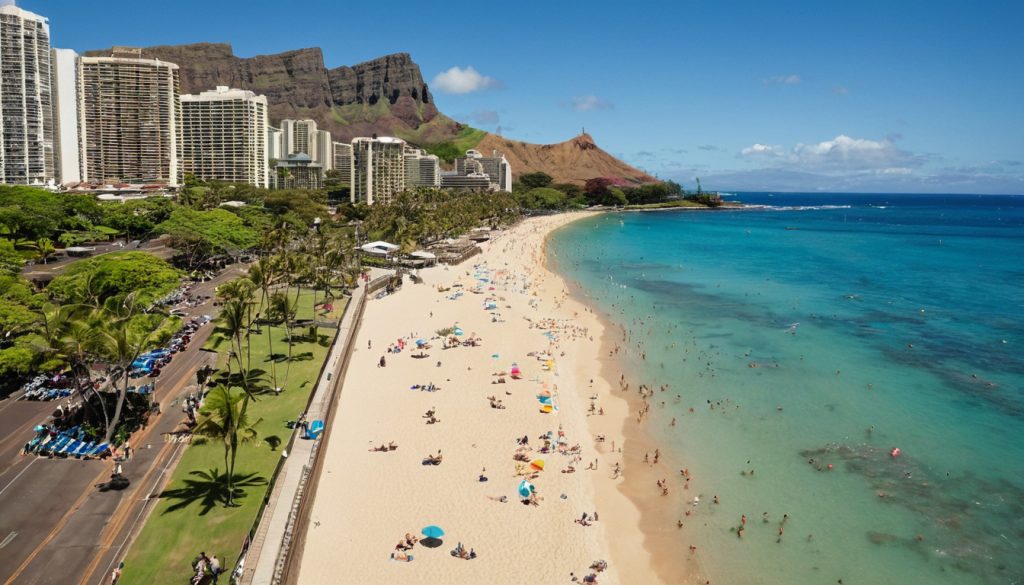
Which beach in Waikiki works best depends on the job the beach needs to do that day: protected swimming, open sand, photos, shade, stroller access, or quick restroom breaks. The shoreline looks continuous, but each section changes once visitors factor in swim walls, reef, crowds, parking, facilities, and same-day warnings.
Which beach in Waikiki should visitors choose for their specific day plan?
Choose by need first, then confirm the water is safe enough for that plan. Waikiki Beach works better as a chain of named sections than as one interchangeable shoreline. Love Oʻahu describes Waikiki as about 2 miles long, with sections including Kahanamoku, Fort DeRussy, Royal Hawaiian, Kūhiō, Queen’s, Sans Souci, and Kaimana in its Waikiki Beach section guide.
A quick Waikiki beach choice table should match each traveler type to one beach section
| Visitor priority | Best starting section | Main tradeoff |
|---|---|---|
| First-day family logistics | Kahanamoku Beach | Resort convenience, but lagoon and surf rules still matter. |
| Shade and a calmer break | Fort DeRussy Beach | More shade and space, but watch shallow rocks and reef. |
| Classic sightseeing photos | Royal Hawaiian and central Waikiki | Iconic energy with heavier crowds. |
| Protected family swimming | Kuhio Beach Waikiki | Swim walls help, but tide and crowding still matter. |
| Breathing room and Diamond Head views | Queen’s Beach | Better walking feel, farther from many hotel services. |
Visitors should check beach warnings before walking down with towels and children
Beach choice should pause at the warning sign, lifeguard tower, and waterline. The City and County of Honolulu Department of Parks and Recreation oversees city beach parks and public recreation facilities on Oʻahu, while Honolulu Ocean Safety says it staffs lifeguard towers around the island. A city brown-water notice also told the public to check with on-duty lifeguards for current ocean guidance before entering the water during that advisory period.
- Stay dry or move if posted signs, murky water, or lifeguard instructions point that way.
- Pick restrooms and showers before the first swim.
- Choose the closest sensible section if carrying chairs, coolers, or a stroller.
Kahanamoku Beach near Rainbow Tower Waikiki fits visitors who want space, resort services, and easier first-day logistics
Kahanamoku Beach, near Hilton Hawaiian Village and Rainbow Tower Waikiki, is often the easiest first beach base for visitors staying on the west end because hotels, beach rentals, food, paved approaches, and the Duke Kahanamoku Lagoon sit close together. Its suitability still depends on posted rules, current sand conditions, and same-day ocean judgment.
Kahanamoku Beach works best for visitors based near Rainbow Tower Waikiki or the west end of Waikiki
Kahanamoku Beach saves time for guests near Rainbow Tower Waikiki, Hilton Hawaiian Village, Ilikai, Hale Koa, or the Ala Moana side of Waikiki. From that area, visitors can usually reach the beach through resort-side paths and public shoreline access points without a long Kalakaua Avenue walk.
The main advantage is friction reduction. Families can test a short swim, return for snacks, change towels, or reset a tired child without committing to the denser central Waikiki corridor. Love Oʻahu describes Kahanamoku Beach as having calm water and a separate man-made lagoon suited to families with small children. Visitors should still treat posted lagoon signs as the rule source for swimming areas, hours, flotation devices, and managed zones.
Restrooms, showers, rentals, and food are generally easier to solve here than on a quieter stretch, but the closest open option depends on which side of the lagoon or beach you choose. The City and County of Honolulu Department of Parks and Recreation lists public resources such as beach parks, Ocean Safety and Lifeguard Services, beach wheelchairs, park locations, and maps.
The Kahanamoku Beach tradeoff is that resort convenience does not replace same-day swim judgment
Kahanamoku Beach can feel easy because rentals, hotels, paid parking, and paved approaches are close by, but convenience does not make the ocean predictable. Check posted warning signs, reef exposure, surf direction, water clarity, and lifeguard advice before children or weaker swimmers enter the water.
Accessibility also needs a check at the sand line. Paved resort and sidewalk routes can help strollers and mobility devices reach the area, but soft sand, crowded paths, restroom layouts, and rental queues may still create pinch points. For context, the 2010 ADA Standards for Accessible Design use a 30 by 48 inch clear floor or ground space as a wheelchair-positioning benchmark.
Central Waikiki Beach fits visitors who want classic sightseeing, hotels, and quick food access more than quiet sand
The central beach in Waikiki, around the Royal Hawaiian, Moana Surfrider, and Kalakaua Avenue frontage, is best for visitors who want the iconic Waikiki scene between swims. It is weaker for travelers who need quiet sand, predictable shade, or a low-friction family base during peak afternoon crowd periods.
Central Waikiki Beach is the strongest choice for photos, people-watching, and short sightseeing breaks
Central Waikiki Beach works well when the beach day is partly a sightseeing day. Visitors can step from Kalakaua Avenue through signed public beach access paths, hotel-fronting walkways, and open sand routes, then return quickly to shops, coffee, casual meals, and hotel lobbies.
Royal Hawaiian Beach is the signature version of this choice. Love O‘ahu describes Royal Hawaiian Beach as a busy central Waikiki section with catamarans, surf lessons, and nearby food and drink options. Diamond Head photos, outrigger canoes, surf lesson groups, hotel umbrellas, and sunset crowds can all sit in the same frame.
Central Waikiki Beach is harder when visitors need shade, space, or fast bathroom access
Central Waikiki Beach becomes less forgiving as gear increases. Shade is patchy and changes with palms, buildings, umbrellas, and time of day. Open sand can feel tight by midday, especially near hotel activity zones, surf lesson staging areas, and catamaran loading points.
Restroom planning also matters. Central beach users should identify the nearest public restroom or shower before settling in, because hotel restrooms generally serve guests or customers. Families with strollers, older travelers, and anyone carrying chairs should expect sidewalk congestion on Kalakaua Avenue during busy periods.
Kuhio Beach Waikiki fits families who want protected swimming, lifeguards, and easier restroom planning
Kuhio Beach Waikiki is the strongest candidate for families who want a more defined swim area, visible public facilities, and a straightforward beach base near central Waikiki. It is not automatically calm every day, so parents should still confirm posted signs, lifeguard advice, tide conditions, and crowd levels before unpacking.
Kuhio Beach Waikiki is a strong family base when children need short swims and frequent breaks
Kuhio Beach works best when the beach day depends on repeat cycles: swim briefly, rinse off, snack, use the restroom, and return to the towel. The section is known for small protected swim pockets formed by walls or groins, and a local Waikiki beach guide describes Kūhiō Beach as having swim walls that create smaller protected areas near parks and a walking path.
- Choose Kuhio Beach Waikiki if children are still building confidence. The defined swim pockets make it easier to set a visible boundary than on open sand.
- Choose Kuhio Beach Waikiki if restroom planning matters. Public comfort stations and outdoor showers are generally easier to plan around here than on hotel-front sand.
- Choose Kuhio Beach Waikiki if a stroller is part of the day. Nearby sidewalks and paved park paths help, although the final sand crossing can still be slow.
Kuhio Beach Waikiki still requires reef, tide, and crowd awareness
Kuhio Beach can feel organized, but protected does not mean risk-free. Reef, uneven bottom, surge through openings, low-tide shallows, crowded swim lanes, and nearby surf activity can change the comfort level for children and weaker swimmers.
Parents should keep young swimmers inside the most visible protected area, avoid climbing on walls or rocks, and ask the nearest lifeguard where conditions are safest that hour. On-site lifeguard direction should decide the final swim choice.
Queen's Beach and the Kapiolani Park end fit visitors who want more breathing room and a Diamond Head-side walk
The Diamond Head end of Waikiki, including Queen’s Beach and the areas near Kapiolani Park, suits visitors who want a less hotel-dense setting, a scenic walk, and nearby park space. This end works best for mobile travelers who can handle longer walks and verify swim conditions before entering.
Queen’s Beach is better for walkers and repeat visitors than for overpacked first-timers
Queen’s Beach sits on the east side of the main Waikiki shoreline, past Kuhio Beach as visitors move toward Kapiolani Park. Visitors may hear Queen’s Beach, Queen’s Surf, Kapiolani Beach Park, Sans Souci, or Kaimana used for nearby but not identical areas. For planning, treat Queen’s as the transition zone between the hotel-front beach and the park-facing end of Waikiki.
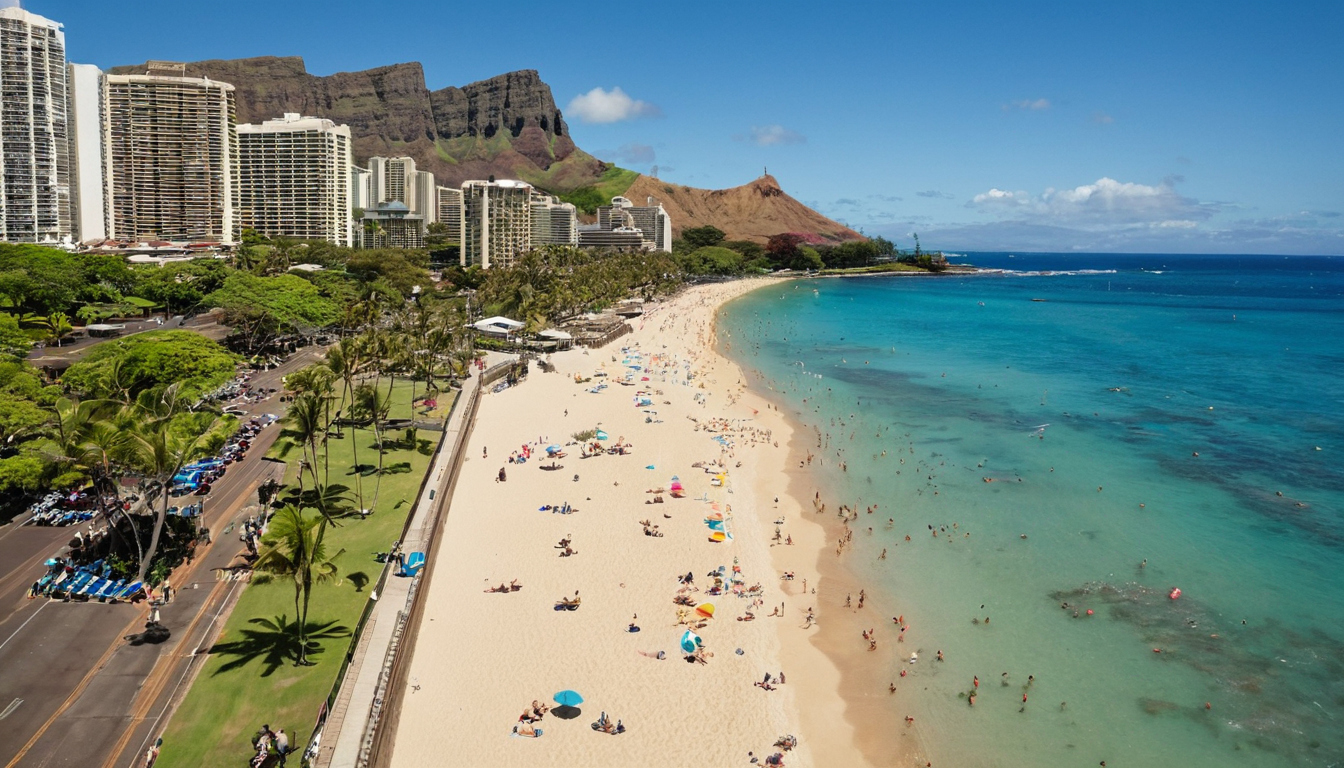
Queen's Beach and the Kapiolani Park end fit visitors who want more breathing room and a Diamond Head-side walk shown with hotel-arrival and visitor-movement context.
Love O‘ahu describes Queen’s Beach as a mellower east-side Waikiki section near public parks and green space, with more local use, surfers, bodyboarders, volleyball, and occasional live performances. That pattern appeals to repeat visitors who do not need to be beside a hotel pool, beach bar, or rental desk every minute.
The tradeoff is distance. From many central Waikiki hotels, Queen’s Beach can feel easy on the first walk and long on the return, especially with wet towels, sand toys, a stroller, or older travelers in the group. Families should identify the nearest public restroom, shower, shaded bench, and safe street crossing before spreading out.
The Kapiolani Park end can pair a beach stop with low-cost sightseeing
The Kapiolani Park end is practical for a beach-plus-walk day. Visitors can combine a short swim or shoreline break with views toward Diamond Head, a walk along Kalakaua Avenue, the Honolulu Zoo exterior, park lawns, and the quieter edge of Waikiki without booking a tour.
Parking and access need a reality check. Metered and curbside spaces around Kapiolani Park can fill quickly, and events, surf, road work, or park activity can change the easy plan. Stroller users should favor paved sidewalks, marked crosswalks, and the flattest beach access they can find.
How should visitors compare shade, restrooms, parking, and stroller access before choosing a Waikiki beach base?
Visitors should compare each beach in Waikiki by the facilities they will use within the next two to four hours: shade, restrooms, showers, parking, ramps, stroller routes, and food access. A beach that looks ideal on a map can become impractical if the group needs frequent breaks or carries heavy gear.
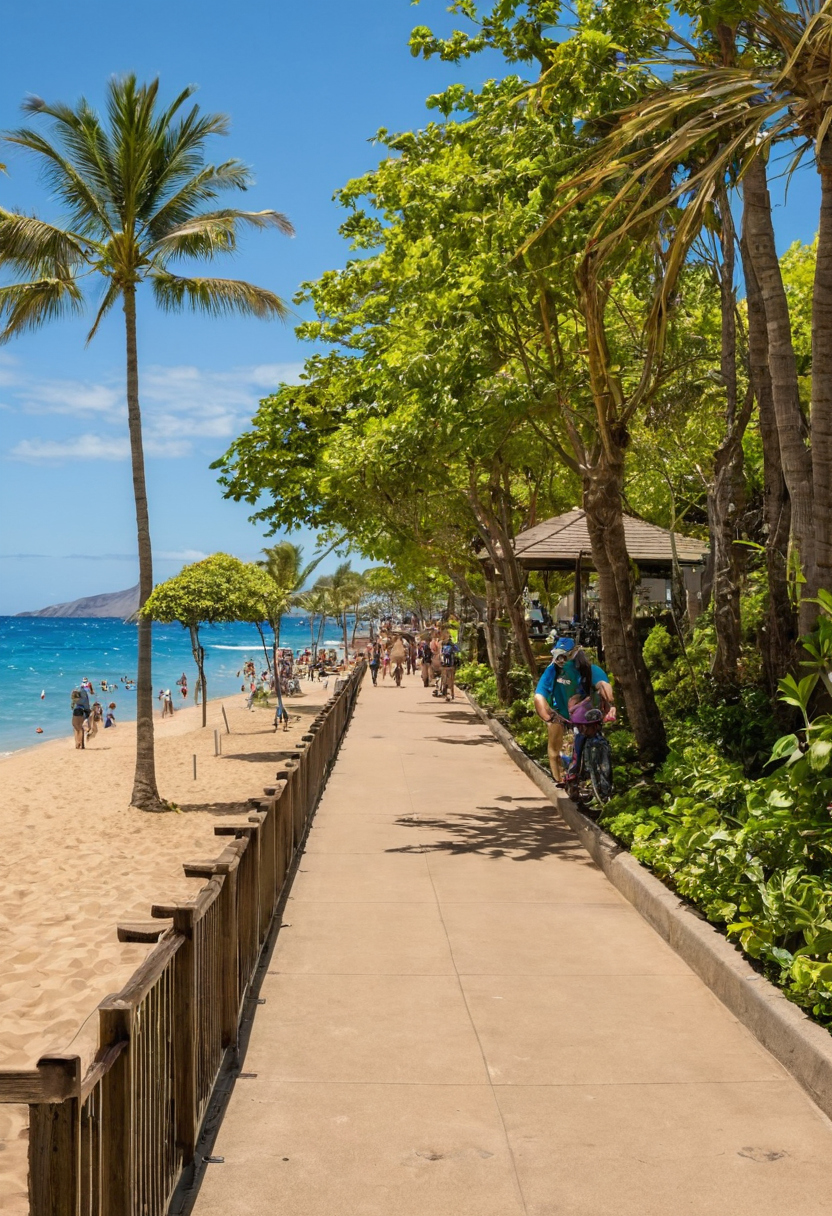
How should visitors compare shade, restrooms, parking, and stroller access before choosing a Waikiki beach base shown with island travel and transport cues.
Shade on Waikiki Beach is limited and changes by time of day, trees, buildings, and beach section
Shade should be treated as a moving resource, not a guaranteed feature. Morning shade may come from hotels and palms near the back of the beach, while midday sun can leave much of the sand exposed. By afternoon, some building shade returns, but the best spots may already be occupied.
Families who need reliable shade should bring a small beach umbrella if luggage space allows, choose a section near palms or park edges, and avoid counting on one perfect tree. Large shade setups can be difficult in crowded sand, and visitors should follow posted beach rules, event restrictions, and rental-operator guidance.
Public bathrooms on Waikiki Beach should be planned before children or older travelers need them
Restroom planning should happen before towels hit the sand. Public facilities and outdoor showers are easier to use from some sections than others, and the shortest route may involve crossing busy Kalakaua Avenue, navigating a seawall path, or pushing a stroller through soft sand.
Visitors with children, mobility needs, or wet swim gear should choose a base within a comfortable walk of restrooms, showers, food, and a hard-surface path. Same-day restroom condition is best checked on arrival.
Waikiki Beach parking can make a farther beach section less convenient than a walkable one
Parking should decide the beach base for car-based visitors as much as sand quality. Metered street spaces, hotel garages, shopping-center garages, and paid lots can differ by time limit, validation rules, event demand, and walking distance to the sand.
If unloading the car requires a long walk with a stroller, cooler, umbrella, and tired swimmers, a slightly busier walkable section may beat a prettier beach farther away. After the group solves shade, bathrooms, parking, and stroller access, the final decision should still wait for same-day ocean safety checks.
What same-day safety checks should visitors make before swimming at any beach in Waikiki?
Every beach in Waikiki needs a same-day safety check because surf, wind, tide, reef exposure, jellyfish risk, water quality, and posted warnings can change the visitor experience quickly. Choose the section only after checking official guidance, reading beach signs, and asking lifeguards when available.
Visitors should treat posted warning signs and lifeguard instructions as the deciding factor
Honolulu Ocean Safety identifies itself as the primary responder for emergencies on Oʻahu beaches and nearshore waters, and its public resources include beach signs, lifeguard tower locations, ocean-emergency preparation, and beach or ocean alerts. Visitors should use those resources before turning a convenient stretch of sand into a swim plan.
Hawaii Ocean Safety advises beachgoers to know personal limits, swim at lifeguarded beaches, swim with a buddy, obey warning signs, and stay aware of the ocean. Its beach-condition guidance points visitors to current lifeguarded beach conditions that are updated every 15 minutes based on National Weather Service forecasts, through Hawaii Ocean Safety.
A practical Waikiki check takes less than five minutes: look for posted warning signs, scan the water for brown or murky color, ask the nearest lifeguard about currents and entry points, and make sure someone can identify the closest cross street, hotel, or landmark if calling for help. If lifeguards are not present where you plan to enter, move to a staffed area or keep the plan to dry sand and wading.
Waikiki swim comfort depends on reef, tide, surf direction, and the swimmer’s ability
Waikiki can look gentle from the sidewalk while still feeling uneven underfoot. Reef shelves, shallow rocks, surge around walls, and changing tide levels can turn a good wading spot into a poor choice for nervous swimmers, tired children, or anyone who cannot comfortably float and return to shore.
Water quality deserves the same attention as waves. A City and County of Honolulu notice reported that the Hawaiʻi State Department of Health issued a Brown Water Advisory for Oʻahu after heavy rains and recommended avoiding ocean waters for at least 72 hours after the last rainfall while the advisory applied. The same notice advised ocean users to avoid brown or murky water and use extra caution near stream mouths, drainage outlets, and runoff areas because runoff can carry bacteria, pollutants, and debris into nearshore waters.
Jellyfish risk should also be part of the morning check, especially on south shore beach days after full-moon periods. If box jellyfish signs are posted, swimmers are leaving the water with stings, or a lifeguard recommends staying out, choose photos, food, or a shaded break instead of forcing the swim.