
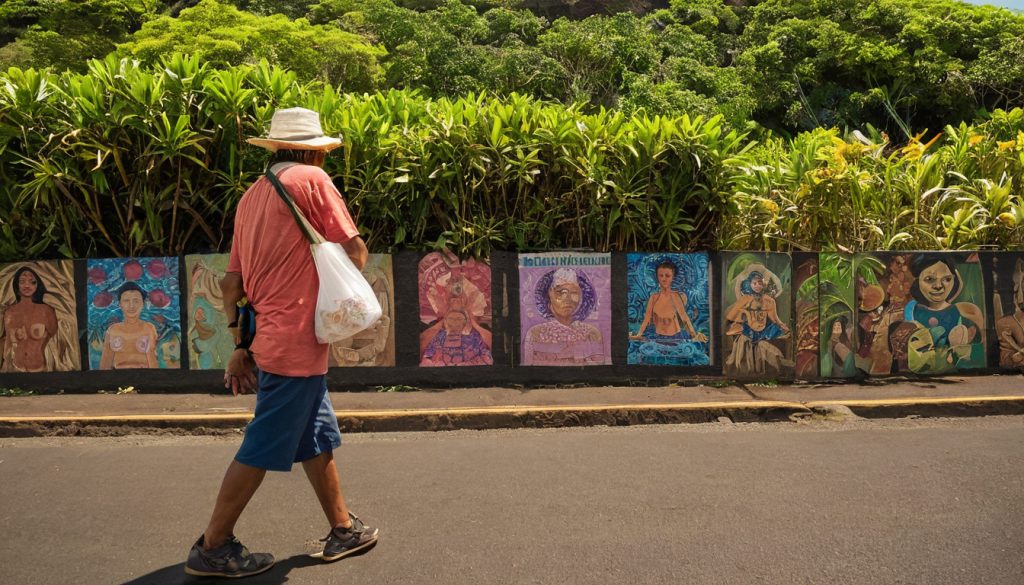
Is a free Kakaʻako art walk still practical after adding midday heat, street crossings, and the return to Waikīkī? Yes, but only if the group chooses its cooling stops, exit points, and route length before departure.

Kakaʻako Murals and Ward Village Walking Loop: Transit, Midday Heat, and Pau Hana Stops shown with practical context cues.
Does a self-guided Kakaʻako and Ward Village loop work for families and retreat groups?
A self-guided Kakaʻako and Ward Village loop works for people comfortable with sustained urban walking, frequent crossings, uneven shade, and a flexible Waikīkī return.
Good fit: Small groups, children accustomed to city walking, compact strollers that handle curb ramps, and visitors with a confirmed meal stop and indoor break.
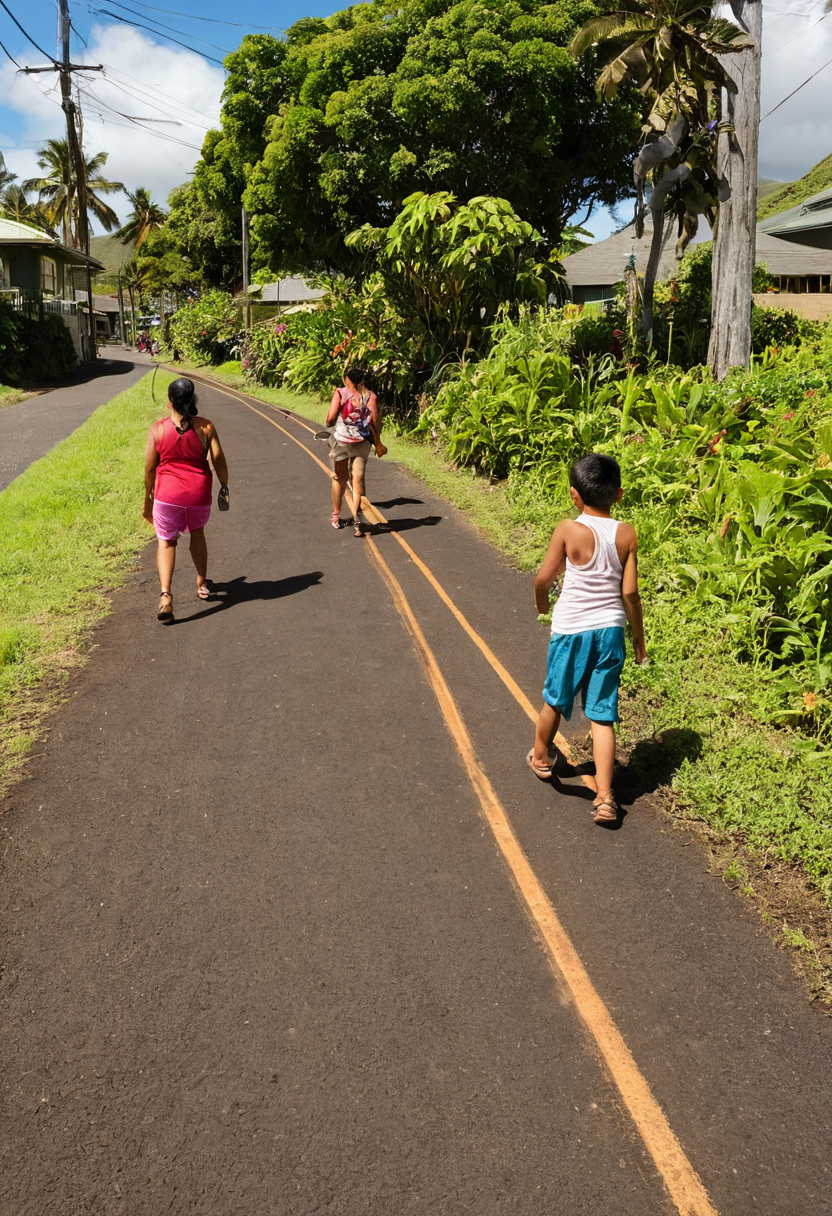
Does a self-guided Kakaʻako and Ward Village loop work for families and retreat groups shown with practical context cues.
Reconsider the full route: Anyone needing frequent seating, continuous shade, predictable surfaces, or a step-free path verified from end to end. Large retreat groups may also separate at signals or obstruct narrow sidewalks.
Contained alternative: Families who want fewer exposed blocks may prefer planning a Waikīkī Aquarium visit.
This is a free public-sidewalk walking tour, not a guided or ticketed art experience. Its main limitation is change: murals, construction barriers, tenant hours, and usable entrances can differ from an older map. The practical route therefore includes only artwork currently visible from public sidewalks.
The most useful Kakaʻako mural route connects verified public art to Ward Village without backtracking
The practical route begins at SALT at Our Kakaʻako, moves east through field-confirmed mural blocks, and finishes at Ward Village or Victoria Ward Park. The one-way direction reduces backtracking and keeps indoor relief and early exits within the plan.
Which Kakaʻako murals can currently be viewed from public sidewalks?
Outdoor artwork changes too often for an undated mural list to guide a family outing. Include a mural only after confirming its wall location and public viewing access, then matching its title and artist with the artist, a recognized arts organization, or the property manager. Exclude walls blocked by gates, construction, temporary fencing, or required commercial entry.
SALT works as a starting anchor because visitors can inspect nearby blocks before committing to the longer eastbound walk. Check the current SALT directory before depending on a tenant for food, seating, or cooling.
How does the Kakaʻako route continue to Ward Village with the fewest difficult crossings?
- Begin at SALT and view only murals confirmed as visible from public sidewalks.
- Move east without doubling back, noting shade, driveway conflicts, temporary obstructions, signal waits, and the closest exit after each block.
- Use signalized crossings toward Ward Village. Finish at Victoria Ward Park or an open indoor destination in the Ward Village directory.
Curb ramps and newer paving do not prove that the complete route is accessible. The federal 2010 Standards became mandatory for covered new construction and alterations on March 15, 2012, but legal coverage must be established before describing a property as compliant. After fixing the walking direction, match the correct TheBus trip to the chosen starting point.
How do visitors take TheBus from Waikīkī to the Kakaʻako walking loop?
TheBus is the primary scheduled transit option from Waikīkī, but the correct trip depends on the hotel block and whether the group starts at SALT or Ward Village. Confirm the route, direction, fare, service period, and numbered stop through the official route maps and timetables for the travel date.
Which Waikīkī boarding point best matches each end of the Kakaʻako loop?
From eastern or central Waikīkī, compare westbound service from Kūhiō Avenue with the goal of reaching the SALT end. From western Waikīkī, compare nearby Ala Moana Boulevard service with a Ward Village start. Record the stop name and pole ID rather than relying on a landmark description.
What are the practical return options from Ward Village to Waikīkī?
Choose the eastbound return stop before the meal break, then verify its pole ID and evening timetable. Keep a property-designated taxi or rideshare pickup point as the backup, confirming the location after arrival. Before committing to the exposed middle blocks, identify where everyone can cool indoors.
Midday heat makes verified indoor breaks essential on the Kakaʻako walking loop
Midday heat is the loop’s main constraint because mural blocks offer uneven shade and intersections can add standing time. Plan around the current forecast, confirm open indoor stops, and shorten the route whenever official guidance or a participant’s condition calls for less exposure.
When should a family shorten or reschedule the Kakaʻako walk for heat?
Check the National Weather Service Honolulu point forecast for the planned walking period. Review temperature, precipitation probability, wind direction, and wind speed rather than treating the daily high as the condition for every block. Also check the Honolulu forecast office for active Oʻahu watches, warnings, or advisories.
Children, older adults, and people with chronic medical conditions face greater risk under National Weather Service heat guidance. Stop for headache, dizziness, nausea, unusual weakness, or confusion. Move indoors and seek urgent help for severe or worsening symptoms. A shortened outing can end at SALT or omit the mural blocks and begin at Ward Village.
Where are the dependable indoor restrooms, seating areas, and cooling stops?
- SALT at Our Kakaʻako: Use it for the opening cooling check. Confirm tenant hours through the official directory. Do not assume every tenant offers public seating, water, or restrooms.
- Street-art blocks: Treat the middle interval as the longest portion without dependable air-conditioning, seating, water, or a verified restroom.
- Ward Village: Confirm an open destination through the property directory. Check entrances, elevators, restroom routes, and purchase requirements on arrival.
Cooling access alone does not make the route suitable for a stroller or mobility device. Sidewalk continuity and crossing conditions need a separate check.
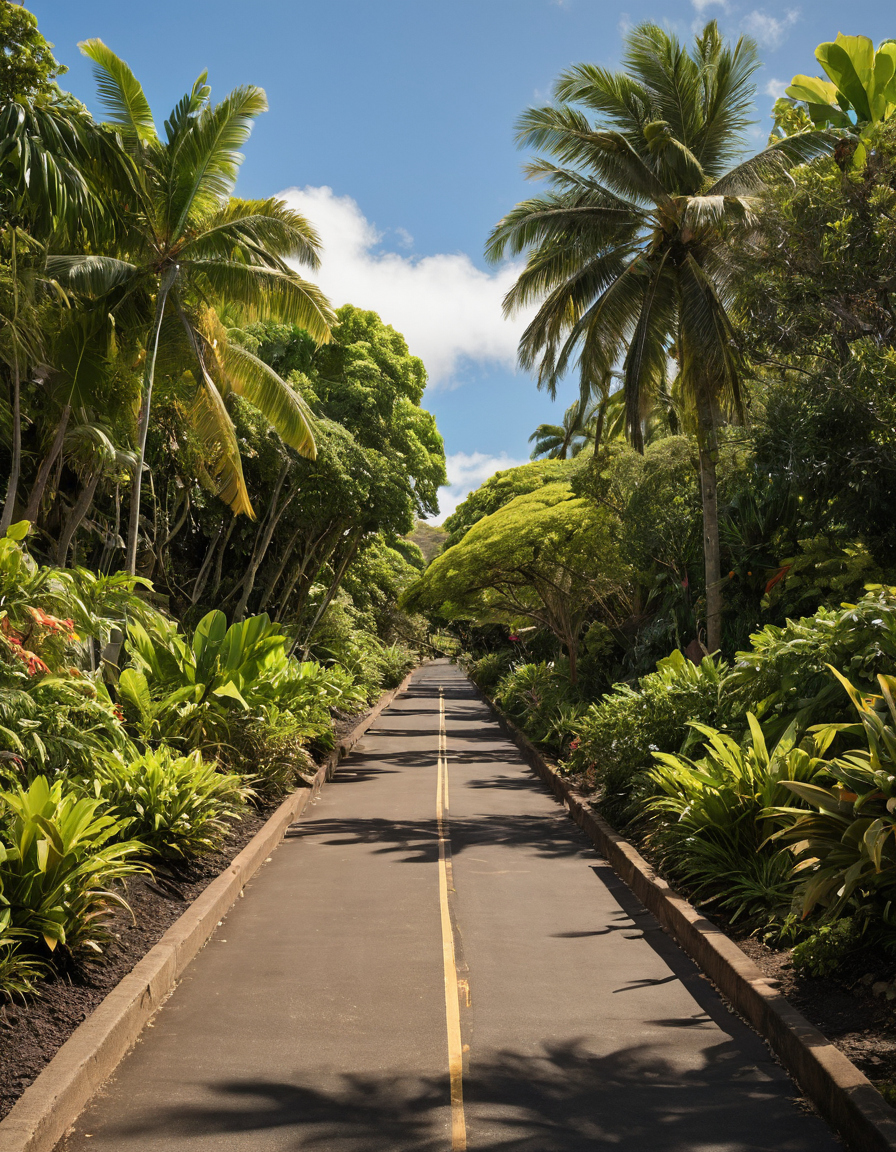
Midday heat makes verified indoor breaks essential on the Kakaʻako walking loop shown with practical context cues.
The Kakaʻako and Ward Village route requires a separate stroller and mobility check
The route is stroller-friendly or mobility-friendly only when current conditions provide continuous sidewalks, usable curb ramps, manageable surfaces, and enough crossing time for the slowest participant.
- Check for broken pavement, narrow sections, steep driveway approaches, fencing, and vehicles crossing sidewalks.
- Confirm that curb ramps align with crossings and nobody must rush through a signal.
- Inspect cooling-stop entrances for heavy doors, thresholds, elevator access, and turning space.
- Choose a turnaround point before fatigue affects safe crossing.
These observations describe conditions on the outing date; they do not certify accessibility.
Where should larger family and retreat groups regroup or leave the Kakaʻako loop?
Use SALT or Victoria Ward Park as a named reunion point, subject to current access, rather than gathering on a narrow sidewalk. Assign one leader to count participants and another to confirm the restroom, bus, or pickup plan. Ask commercial venues about reservations and group limits before arrival. With the exit settled, choose a practical pau hana stop.
Pau hana stops should combine posted prices, all-ages access, and an easy Waikīkī return
Pau hana means the local after-work period. A useful stop during this period needs verified hours, posted prices, all-ages access, suitable seating, and a straightforward return point.
Which Kakaʻako or Ward Village stop works for families, budgets, and retreat groups?
For a lower-cost family stop, look for an all-ages counter-service tenant in the SALT directory. For a wider choice near the route’s finish, use the Ward Village directory. Retreat groups needing one table should contact the restaurant rather than arriving unannounced.
Check same-day hours, reservation rules, restroom access, and the posted menu. Note the prices of an inexpensive item, a typical meal, and a nonalcoholic drink, including any stated service charge, minimum, or restricted-hour condition.
A field-timed Kakaʻako itinerary should include cooler-hours, midday, and shortened versions
A reliable Waikīkī itinerary offers three versions built around current mural access, indoor hours, and transit. Optional mural blocks and meals must remain removable without losing the return plan.
Before departure, check the Honolulu forecast, mural visibility, sidewalk conditions, TheBus timetable, tenant hours, water, sun protection, and return time. Families planning another outdoor day should compare Waikīkiki beach access, shade, and restrooms separately.
Frequently asked questions
How long does the Kakaʻako mural and Ward Village walking loop take with children?
Use recently measured segment, crossing, and break times rather than a fixed district-wide estimate. Children, meals, heat, and signal waits can change the schedule substantially.
What can families do in Kakaʻako besides viewing murals?
Families can schedule a meal, an indoor cooling break, or time at Victoria Ward Park, subject to current property access and business hours.
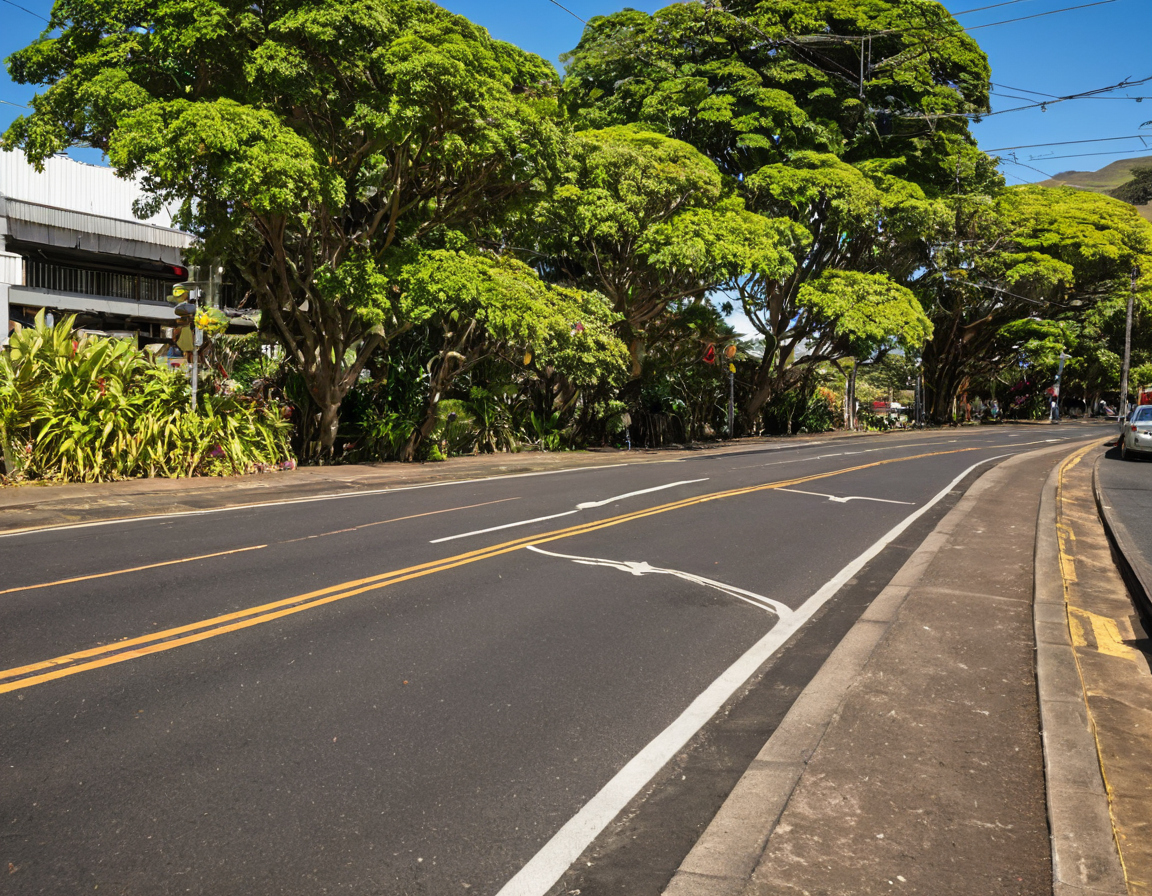
A field-timed Kakaʻako itinerary should include cooler-hours, midday, and shortened versions shown with relevant destination, access, and visitor conditions.
Are Kakaʻako murals free to view without joining a guided tour?
Murals visible from public sidewalks can be viewed without a tour. Commercial entry, special exhibitions, and guided experiences may have separate rules or charges.
Can visitors take TheBus back to Waikīkī during pau hana?
Yes, when current eastbound service matches the selected stop and travel time. Verify the route-specific evening timetable on the outing date.
Is the loop practical with a stroller or mobility device?
Only after current sidewalk, curb-ramp, crossing, entrance, and elevator conditions have been checked for the specific device and participant.
Choose the full, shortened, or indoor alternative before leaving Waikīkī. The Kakaʻako outing works only when planned cooling and exit points are part of the route.